top of page
Search

Whining, Grinding, Howling: A Definitive Guide to Diagnosing Industrial Gearbox Noises

  • Writer: Simple Site Company
    Simple Site Company
  • Nov 21, 2025
  • 4 min read

In the roar of a factory floor, a sudden whine from a gearbox can signal doom. These machines drive production lines, crushers, and turbines.


A small noise often warns of big breakdowns. Ignore it, and costs skyrocket from downtime. One study shows unplanned stops cost plants over $50,000 per hour.


This guide breaks down how to spot and fix gearbox noises. You'll learn to turn sounds into actions that save time and money.


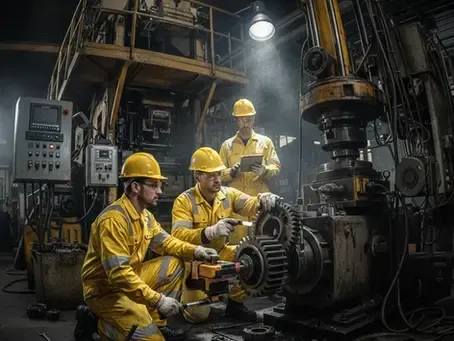
Manufacturing facility with workers, yellow machinery, and robotic arms. Blue workstations and machines in a spacious, industrial setting.

Understanding the Baseline: Normal vs. Abnormal Gearbox Sounds


Gearboxes make noise during work. Some sounds fit right in. Others point to trouble. Know the difference to act fast.


The Acoustic Fingerprint of a Healthy Gearbox


A healthy gearbox hums low and steady. Under load, it whirs smooth like a fan on low speed. Makers set sound limits based on size and type. ISO 8573 standards help measure these levels. Check your unit's manual for exact baselines. Deviations above 3 decibels often mean issues.


Environmental Factors Influencing Gearbox Acoustics


Heat can change how a gearbox sounds. Hot air thickens oil, raising pitch a bit. Heavy loads add rumble without harm. Cold temps make gears mesh tighter, creating short whines. Track these shifts with logs. They mask real faults if you don't note them.


Essential Tools for Accurate Noise Analysis


Use tools to hear beyond the ear. Ultrasonic detectors catch high tones from early wear. Vibration meters show shakes tied to sounds. High-sensitivity mics record for later review. Start with non-contact options to stay safe. Pair them with apps for quick data trends.


Decoding the Symphony of Failure: Common Gearbox Noises and Their Sources


Close-up of a damaged industrial bearing with metal debris around it. Two spherical bearings are visible in the background on a white surface.

Noises tell tales of wear inside. Each type links to a fault. Pin them down to fix quick.


The High-Pitched Whine (Whining or Whirring)


A sharp whine screams at high speeds. It comes from gears that mesh wrong. Worn teeth or bad alignment cause this. Bearings with inner race cracks add to the pitch. In pumps, this whine grows with rpm. Test by slowing speed—if it drops, check gear profiles first.


The Low-Frequency Growl or Rumble (Grinding)


Grinding rumbles deep like stones in a tumbler. Bearings often cause it. Pits on outer races or damaged balls create the growl. Loose bolts let parts slap, adding bass. This sound builds slow under load. In mills, it signals big wear if unchecked.


  • Check mounts for play.

  • Listen near the base for clues.

  • Note if it ties to cycles.


Intermittent Clanking or Knocking (Impact Sounds)


Clanks hit like hammer taps. They strike once per turn of a shaft. Backlash lets gears slap. Cracked teeth or bent shafts make knocks. Couplings loose add bangs. In conveyors, this points to impact damage. Count the hits to find the bad part.


The Persistent Howl or Screech


Howls tear through like wind in gaps. Dry oil starves parts, making metal rub. Imbalance on shafts howls loud. Seals scraping housing screech steady. This noise won't quit. In fans, it warns of fast failure. Stop soon to avoid shards..


Root Cause Analysis: Investigating Lubrication and Component Wear


Hands holding an oily sample in a bottle, with a yellow machine in the background. A tablet displays a vibration severity graph.

Sounds lead to checks. Look at oil and parts next. This pins the real problem.


The Role of Oil Analysis in Noise Diagnosis


Oil holds clues to gearbox health. Particles in it cause grinding rumbles. Magnetic bits mean metal on metal. Abrasive wear shows fine grit; fatigue leaves chunks. Send samples to labs quarterly. Clean oil quiets whines. Dirty stuff growls louder over time.


  • Filter for ferrous debris.

  • Test viscosity for changes.

  • Spot water mix that rusts parts.


One plant cut failures 40% with routine tests.


Bearing Failures: The Most Common Culprit


Bearings fail first in most cases. Skidding makes light whines from slip. False brinelling dents races, causing knocks. Spalling flakes off, rumbling deep. In wind turbines, overload spalls fast. Heavy presses see brinelling from sits. Each mode rings different. Swap bad ones to end the noise.


Gear Tooth Geometry Degradation


Gears wear in shapes. Profile loss whines high as tips mesh poor. Pits chip edges, clanking on hits. Uneven load wears one side fast. This skews mesh in reducers. Measure teeth with gauges. Fix alignment to even it out. Bad geometry spreads noise wide.


Predictive Maintenance Strategies: Stopping Noise Before It Stops Production


Catch issues early. Use plans to watch sounds grow. This keeps lines running.


Implementing Vibration Monitoring Programs (VMP)


VMP tracks shakes that make noise. Measure speed, accel, and shift. Trends show rises before ears hear. Set alerts at 20% over baseline. In factories, this spots whines weeks ahead. Log data daily. Adjust for loads to keep reads true.


Integrating Acoustic Emission (AE) Technology


AE picks stress waves from cracks. Sensors catch friction before vibes spike. It flags bearing pits or gear chips. Howls show as bursts in graphs. Add AE to hot spots like turbines. Costs drop with early finds. Train staff on readouts.


  • Mount sensors near gears.

  • Filter noise from surrounds.

  • Review waves for patterns.


Establishing a Regular Shutdown Inspection Protocol


Shut down on schedule to look close. Pull plugs for metal bits. Check oil for cloud or smell. Wiggle shafts for play over 0.005 inches. In downtime, eye seals for rubs. This finds howl sources. Do it monthly to beat surprises.


  • Clean strainers first.

  • Log all finds.

  • Tag bad parts quick.


Emergency Response: Immediate Action When the Noise Becomes Critical


Bad sounds demand fast moves. Know when to slow or stop. Safety comes first.


Load Reduction vs. Immediate Shutdown Protocol


Reduce load if whine grows slow. This limps to shop without crash. But knock hard? Shut down now. Metallic bangs mean breaks inside. Criteria: If sound ties to revs and hurts, kill power. In crushers, low load buys time. Always log the choice.


Temporary Fixes vs. Permanent Repair


Skip quick oil adds to hush bearings. It hides death till boom. Band loose parts only till swap. Real fix means new bearings or gears. Align after. Temp steps risk fires or spills. Go full repair to last.


From Auditory Alert to Operational Excellence


Gearbox noises guide fixes from sound to root. Whines point to mesh woes; growls to bearings. Verify with oil tests and vibes. Treat sounds as data, not bugs. This builds strong ops.


Key Takeaways:


  • Set noise baselines now for quick spots.

  • Run oil checks every three months to catch wear.

  • Add AE tools to watch cracks early.

  • Train teams on shut protocols to cut risks.


Comments


bottom of page